
How to Prepare for Tree Removal on Your Property
A tree removal crew can only work as safely and efficiently as the site allows. A locked side gate, a car under the drop zone or a dog loose in the yard can delay the job before the first cut is made. Knowing how to prepare for tree removal helps protect your property, your household and the people doing the work.
For homeowners, landlords and property managers across Brisbane, Moreton Bay and the Sunshine Coast, preparation is usually straightforward. The key is to deal with approvals, access, hazards and clear communication before the arborists arrive.
Check whether approval is needed first
Do not assume a tree can be removed simply because it is on private land. Tree protection rules can apply through your local council, especially where a tree is significant, located near a waterway, forms part of a development condition or sits within an environmentally protected area.
The requirements vary between council areas and even between properties. A tree may be exempt if it is dead, storm-damaged or presents an immediate risk, but that is not something to guess at. If there is any uncertainty, check the relevant council requirements and discuss the tree with a qualified arborist before booking removal.
If you live in a strata complex, townhouse community or body corporate property, approval may also be needed from the body corporate. Landlords should confirm arrangements with tenants, while property managers should make sure everyone affected has clear notice of the work.
Make the work area accessible
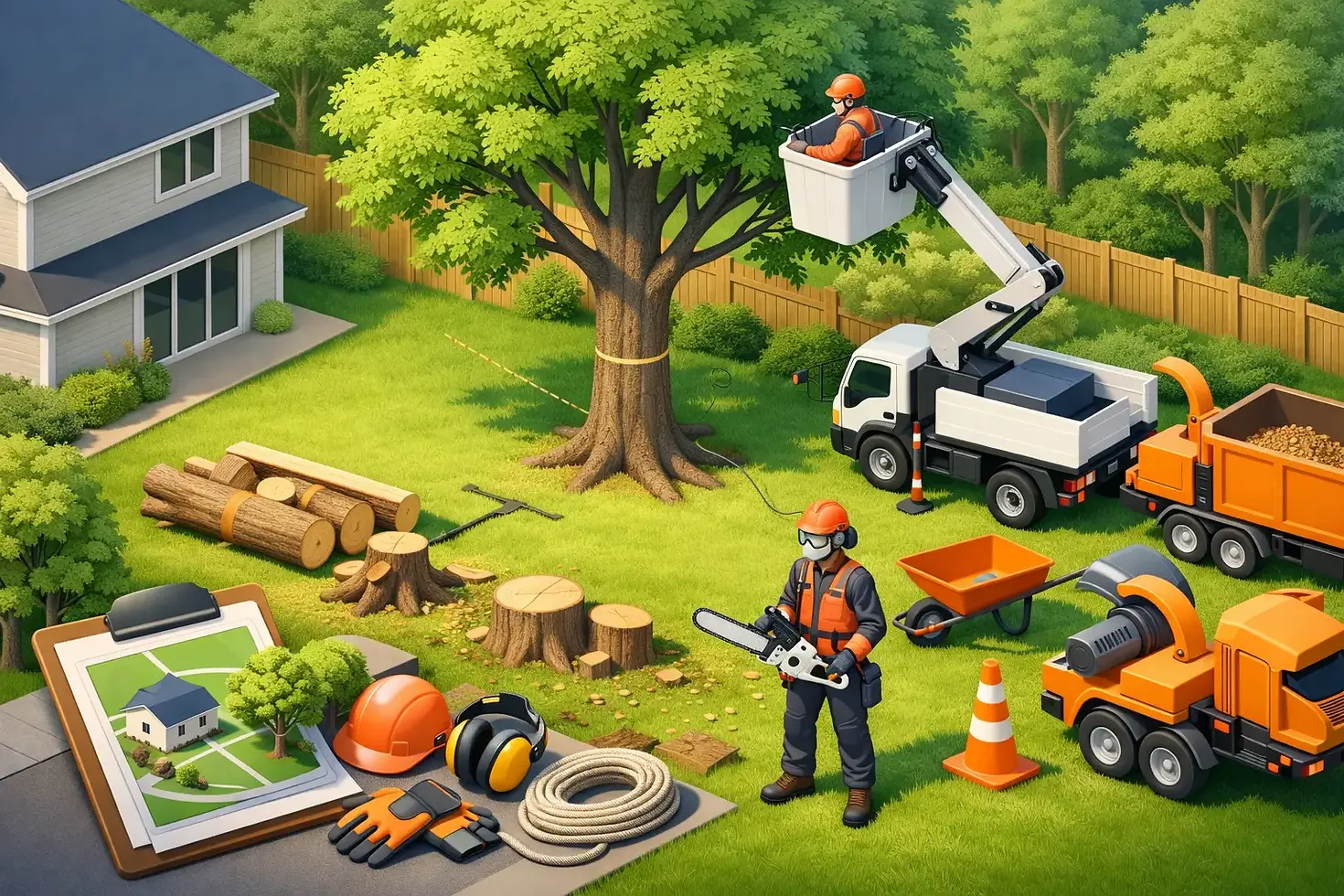
Tree removal equipment is heavy and site access matters. Crews may need room for a chipper, truck, ute, stump grinder, elevated work platform or other machinery, depending on the tree and the job. Narrow access does not always rule out removal, but it can change the method, labour required and cost.
Before the job, unlock side gates and remove anything that blocks the path to the tree. This may include wheelie bins, garden furniture, pot plants, children’s toys, hoses, trailers and stored materials. Let the arborist know early if there are steep slopes, tight gates, stairs, retaining walls or limited street parking.
If access is through a neighbour’s property, obtain their permission in advance. Never assume a crew can enter next door because the tree branches cross a boundary. Good preparation avoids awkward discussions on the day and keeps the work moving.
Keep vehicle access clear
Where possible, move vehicles out of driveways, carports and garages close to the work area. The crew may need the space for equipment or a clear route to remove logs and green waste. If roadside parking or traffic management is likely to be required, ask the contractor what needs to be organised beforehand.
Clear the drop zone and protect valuables
Professional tree removal involves controlled dismantling, but branches, timber sections and sawdust still need somewhere safe to go. The crew will assess drop zones and use ropes or rigging where required, particularly around homes, fences, sheds and pools. You can help by clearing the area beneath and around the tree.
Move outdoor furniture, barbecues, clotheslines, garden ornaments and portable play equipment. Cover or relocate delicate pot plants if they are near the work area. If a trampoline, cubby house or pool equipment cannot be moved, point it out during the on-site quote so the arborist can plan around it.
It is also worth checking windows, solar panels, guttering and nearby structures. These do not prevent tree removal, but the team needs to know what is beneath the canopy and how close the tree is to the building. Taking a few photos before work starts can provide peace of mind, particularly for rental properties or shared sites.
Prepare pets, children and neighbours
Tree work is noisy. Chainsaws, chippers, machinery and falling timber can unsettle pets and make the yard unsuitable for children while the crew is on site. Keep dogs, cats and other animals securely indoors or arrange for them to stay elsewhere during the work. A frightened pet can escape through an open gate or move into an active work zone quickly.
Children should be kept well away from the removal area, machinery and vehicles. This includes curious children from neighbouring properties. Workers need to focus on overhead hazards, rigging and communication with each other, not on stopping people from entering an exclusion zone.
A quick chat with immediate neighbours is courteous and practical. Let them know the expected date, approximate start time and whether access near a shared fence or driveway could be affected. This is particularly helpful with large trees, trees on boundaries and homes with limited parking. It can prevent concerns about noise, sawdust or temporary access restrictions.
Identify powerlines and other services
Powerlines are one of the most serious risks in tree work. Never try to cut, prune or pull down branches near overhead electrical lines yourself. Even a branch that appears clear of a line can move unexpectedly when cut.
Tell your arborist about any overhead powerlines, service cables, solar connections, NBN lines, pool wiring, irrigation lines or underground services near the tree. A qualified contractor will assess the clearances and determine the safest method. In some situations, electrical network involvement or a specialist approach may be required.
Do not rely on a photo alone if the tree is close to services. An on-site assessment gives the crew a proper view of the canopy, lean, branch weight, access points and hazards that may not be obvious from ground-level images.
Tell the arborist about the tree’s condition
Share anything you know about the tree before work begins. Mention recent storm damage, cracking, dead limbs, visible pests, fungi at the base, hollow sections, previous branch failures or a noticeable lean. These details help the arborist assess the risk and choose the right removal method.
Also mention if the tree has been sprayed, treated or altered recently. A tree that looks stable may be brittle internally, while a tree that appears healthy may have root damage from construction, drainage works or soil movement.
This is where qualified arboricultural experience matters. Tree removal is not simply cutting from the bottom up. The crew needs to consider the species, structure, decay, load distribution, nearby assets and the safest direction for each section to travel.
Decide what happens to timber, mulch and the stump
Before removal day, be clear about the finish you want. Some property owners want all green waste removed. Others would like mulch left for garden beds, while some want larger logs retained for firewood or landscaping. These choices can affect how much space is needed on site and how the quote is prepared.
Stump grinding is often a separate part of the job. Removing a tree at ground level leaves the stump and root base behind, which can be a trip hazard, attract pests or get in the way of future landscaping. If you plan to turf the area, install a fence, lay a path or replant, ask whether stump grinding and surface-root removal are suitable.
Keep in mind that grinding creates mulch and leaves a depression that may need soil and turf later. It is a practical option for most residential sites, but the right depth depends on what you intend to build or plant there.
Confirm the plan before work starts
On the day, make sure the person who understands the job is available by mobile, at least at the beginning. Confirm which tree or trees are being removed, what is being retained, where equipment can go and what will happen to the waste. If there are gates to lock afterwards, alarms, pets, tenant instructions or site-specific rules, raise them before the crew starts.
Do not be afraid to ask questions. A professional team should explain the plan in plain English, including any changes needed because of weather, access or unexpected tree condition. Wet ground, high winds and hidden decay can alter the safest way to complete a job. Sometimes postponing work is the right call, not an inconvenience.
A safer start makes for a cleaner result
Preparing for removal does not mean taking on dangerous work yourself. It means giving the arborist a clear, safe site and the information needed to make good decisions. Clear access, secured pets, protected valuables and early approval checks can make a major difference.
If you are unsure where to begin, arrange an on-site assessment with a qualified arborist. JL Tree Services QLD can inspect the tree, discuss access and clean-up options, and provide a practical plan for getting the job done safely.


Comments